
Hyrox Injuries: Racing Safely as Abu Dhabi Event Begins

Jesse Hebert used to be a bodybuilder. Now he is a new runner with marathons in his sights, and in a race that is half running, that shift matters. For the 29-year-old personal trainer, avoiding Hyrox injuries begins with being honest about where you are weakest.
Hebert will compete in the Pro category in Abu Dhabi on Saturday, as Hyrox returns to the capital for a three-day event at ADNEC. The competition runs from 23 to 25 October, with a women-only race day on Friday 23 October, according to the venue’s event listing.
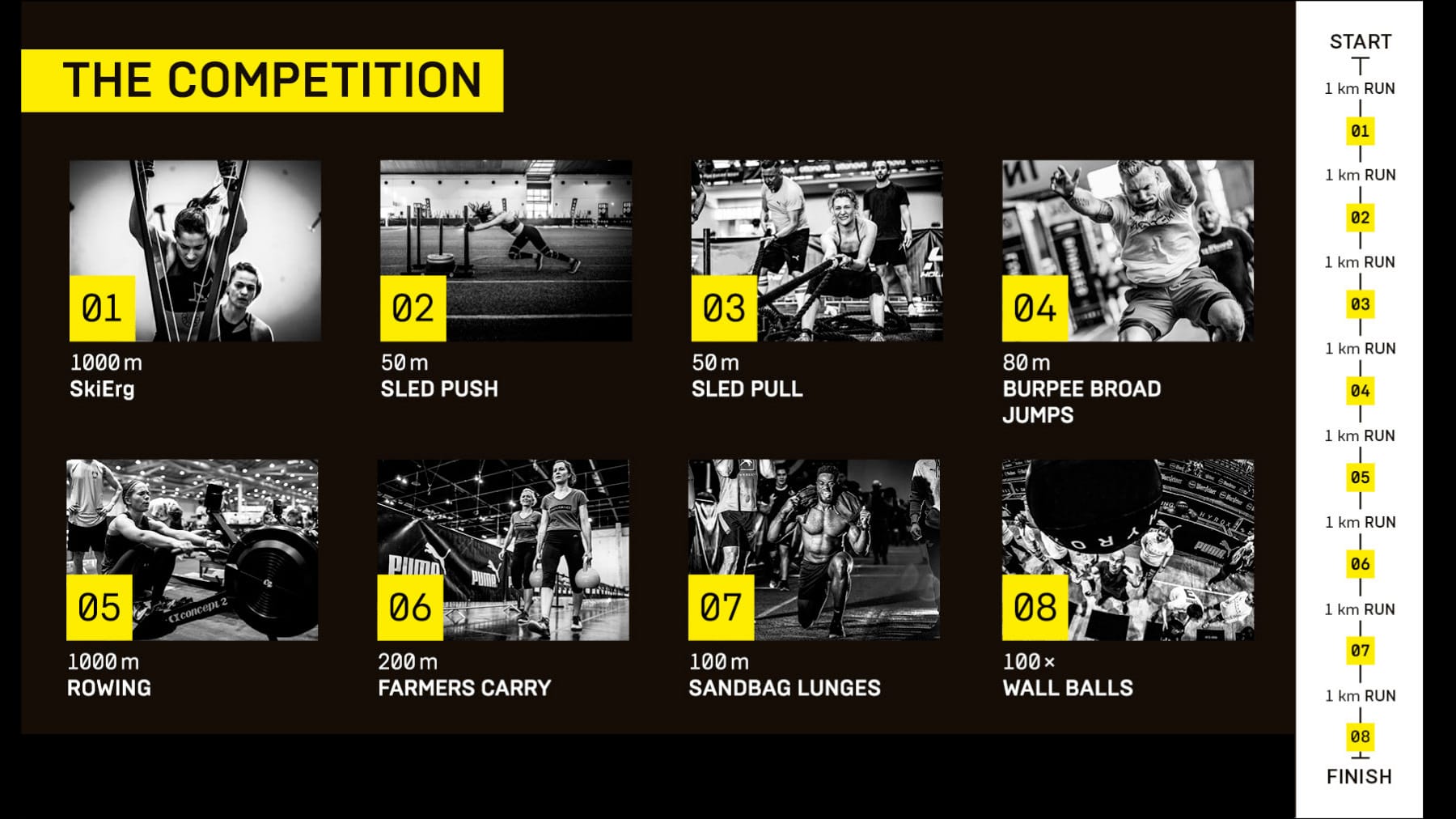
The format stays the same from city to city, the organisers state. Participants run 1km, complete one functional workout station, and repeat that eight times.
The medical picture of the fitness race is still forming. “There is little scientific evidence on its injury patterns,” explains Dr Paolo Cellocco, a consultant orthopaedic surgeon in Dubai.
Between the trainer’s view from the start line and the surgeon’s view from the clinic, a clearer idea of how to prepare safely takes shape.
‘I would call it a running race’
The workout stations may draw the eye, but Hebert’s focus lies elsewhere.
“I would call it a running race as 50% of it is running,” he points out. Before signing up, beginners should be able to cover 8km, he advises, as the event can become very strenuous.
Without that base, in his experience, the challenge becomes very difficult. Building it first also makes the work more enjoyable, because people can see the benefits of their efforts.
From there, he recommends learning each station’s standards and putting in skill work at every one. He also describes Hyrox as a fun and inclusive community, where people can compete or simply enjoy the experience.
Why Hyrox injuries build up over time
Hyrox injuries are usually related to muscle fatigue and overload, as well as certain tendon or ligament ruptures, according to Dr Cellocco. He links this to the race’s mix of high-intensity weightlifting repetitions with running and burpee jumps.
Beginners and advanced athletes alike can be affected.
Unlike contact sports such as football, where high-energy impacts can damage ligaments, Hyrox mainly produces overload conditions, the surgeon notes. He divides them into two groups.
The first develops without any single traumatic moment. Fatigue accumulates in muscles such as the calves, or in the cartilage of joints such as the knee.
It is not uncommon, he observes, to see patients with calf strains or even tears that they describe as spontaneous. Some begin when the person is not even exercising.
The trigger, in his view, is repetitive, demanding activity with limited recovery, both within a session and between sessions. The body normally heals small micro-traumas, which is how muscle and stamina grow. Without enough rest, those micro-injuries pile up and may turn into something more serious at any point.
“In training, proper recovery is as important as the athletic sessions”
Dr Paolo Cellocco
The second group follows accidents during the activity. These typically involve tendons in the arms, shoulders, chest and knees, as well as the Achilles. Twists can also injure the knee ligaments and menisci.
Low back pain is a common finding among people who practise Hyrox, he adds. Problems with the spinal discs can develop over months, while a slipped disc usually happens after deadlift-style lifting.
'Train the weaknesses, not just the strengths'
Asked how to prevent Hyrox injuries, Hebert turns straight to the shortcomings people tend to avoid. “If you only focus on what you’re good at you’re missing an important element of your training,” he argues.
Whether the gap is running, skills or strength, it will be exposed quickly in a race, he warns. Once the pace picks up, that soon leads to injury.
Hebert knows where his own weak spot lies. Having moved from bodybuilding into running, he finds the 80-metre burpee broad jumps the hardest station. Describing himself as a heavy person, he finds it tough to keep launching that weight forward, jump after jump. Wall balls come a close second.
The warm-up matters too. He recommends keeping it dynamic and covering every movement the session or race will demand. With high mechanical and muscular loads, Hebert suggests stretching, firing up the muscles and fuelling the body properly. As he puts it: “The engine needs good food to run well.”
'A sports car loaded with bricks'
Dr Cellocco reaches for a similar image with his patients. He asks them to picture themselves as cars, whether new, sporty or classic, well maintained or poorly looked after. A car forced to drive with bad wheel alignment, or a sports coupé loaded with a ton of bricks, will not last long, he tells them.
Before trying Hyrox, an orthopaedic assessment may be crucial, he continues. It can identify conditions that restrict certain exercises, such as ongoing cartilage wear and tear or mild misalignments of the body.
Excess weight is another concern, as it places constant overload on the joints. He calls it a misconception that people lose weight in the gym. Weight loss comes from diet and an accurate nutritional plan, he believes, while the gym helps the body build muscle and optimise its metabolism.
His central message is patience. “While the muscle mass tends to respond quickly to training, the other structures involved in movement (tendons and ligaments) do not,” he explains.
“Gradual, progressive exercising is how we protect our body while expressing our athletic potential.”
Finding the right category
Going solo is not the only option. Hyrox offers four categories, according to the organisers. Open is the standard format, while Pro, the category Hebert has entered, uses heavier weights and is aimed at experienced competitors.
In Doubles, two people run together and split the workout stations as they choose. In Relay, a team of four shares the course. An online questionnaire on the Hyrox website helps people find their level.
For Hebert, Saturday’s Pro race will bring the burpees and wall balls he finds hardest. His advice for anyone considering a first race is simple: build the running base, then train the parts you would rather skip.



Comments ()