
Jordan to witness the Moon and Pleiades star cluster alignment on October 28
The skies over Jordan will see a pre-dawn conjunction between the moon and the Pleiades star cluster on Wednesday 28 October.
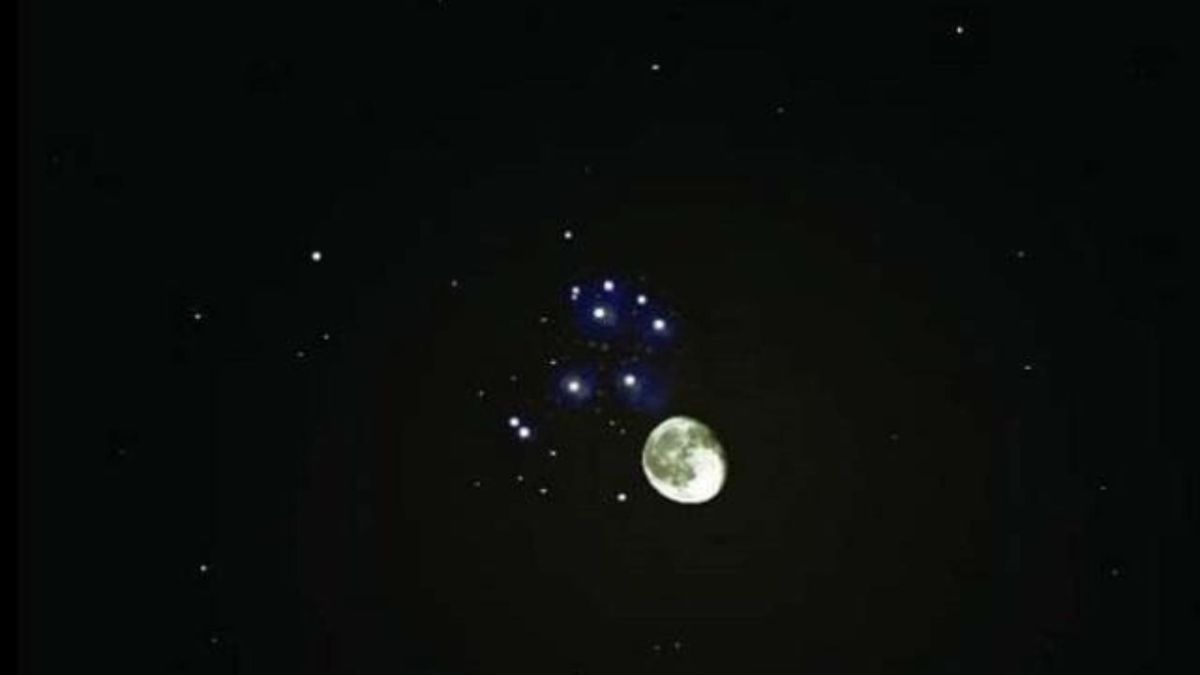
The skies over Jordan will see a pre-dawn conjunction between the moon and the Pleiades star cluster on Wednesday 28 October.
The event recalls Jordanian folk heritage, particularly among Bedouin communities. They used conjunctions of the moon and the Pleiades to calculate seasons and to anticipate rain, plant growth and grazing.
Jordanian Astronomical Society President Dr Ammar Sakaji told the Jordan News Agency (Petra) that the moon will be in its waning gibbous phase, with about 95 per cent illumination.
The angular distance between the centre of the moon and the cluster will be less than one degree. Moonlight glare may affect the visibility of the cluster’s fainter stars.
The Pleiades, known astronomically as Messier 45 or the Seven Sisters, lie in the constellation Taurus, about 435 light-years from Earth. They held a prominent place in ancient Arab culture as a guide to the changing seasons.
Fahad Akhu Rasheedeh, a researcher in folk and Bedouin heritage from Mafraq governorate, said northern Bedouin tradition links the event to “Qiran Sab‘at ‘Ashar” (the 17th conjunction), also called “Qiran al-Wasm”. It falls within “al-Sufri”, a transitional period between summer heat, milder autumn weather and the wait for the first rains.
He said the name comes from the yellowing and drying of grasses and plants, not from the Hijri month of Safar.
Some Bedouin accounts divide al-Sufri into three stages tied to the moon’s conjunctions with the Pleiades. The first is Qiran Tis‘at ‘Ashar (the 19th), also known as Qiran al-Hareef or al-Wasm al-Badri. The second is Qiran Sab‘at ‘Ashar (the 17th), also known as al-Qiran al-Thurawi or Qiran al-Wasm. The third is Qiran Khamsat ‘Ashar (the 15th), known as Akhir al-Wasm. He said the names reflect a folk calendar whose details differ between regions and tribes.
Popular proverbs link rain to plentiful grasses and desert truffles (faqa‘). One says: “If it rains in the 19th conjunction, the earth brings forth every kind of grass and truffle.”
Sakaji said the conjunction is a chance to document Jordan’s astronomical heritage and folk knowledge about rain and pasture, and to read it in light of modern science. He stressed that it is a time marker in the folk calendar and has no causal link to weather.
The society will observe and document the conjunction using telescopes, binoculars and astronomical cameras.
Source: Jordan News Agency (Petra)



Comments ()