
Cracking Summer Fashion: Style Coach Explains How to Dress Professional in the UAE Heat
“If your blazer says ‘I am in charge’, but your posture says ‘I hope I’m not bothering anyone’, people receive mixed signals,” says Raluca Marcu, Romanian Image Scientist and Men's Style Coach

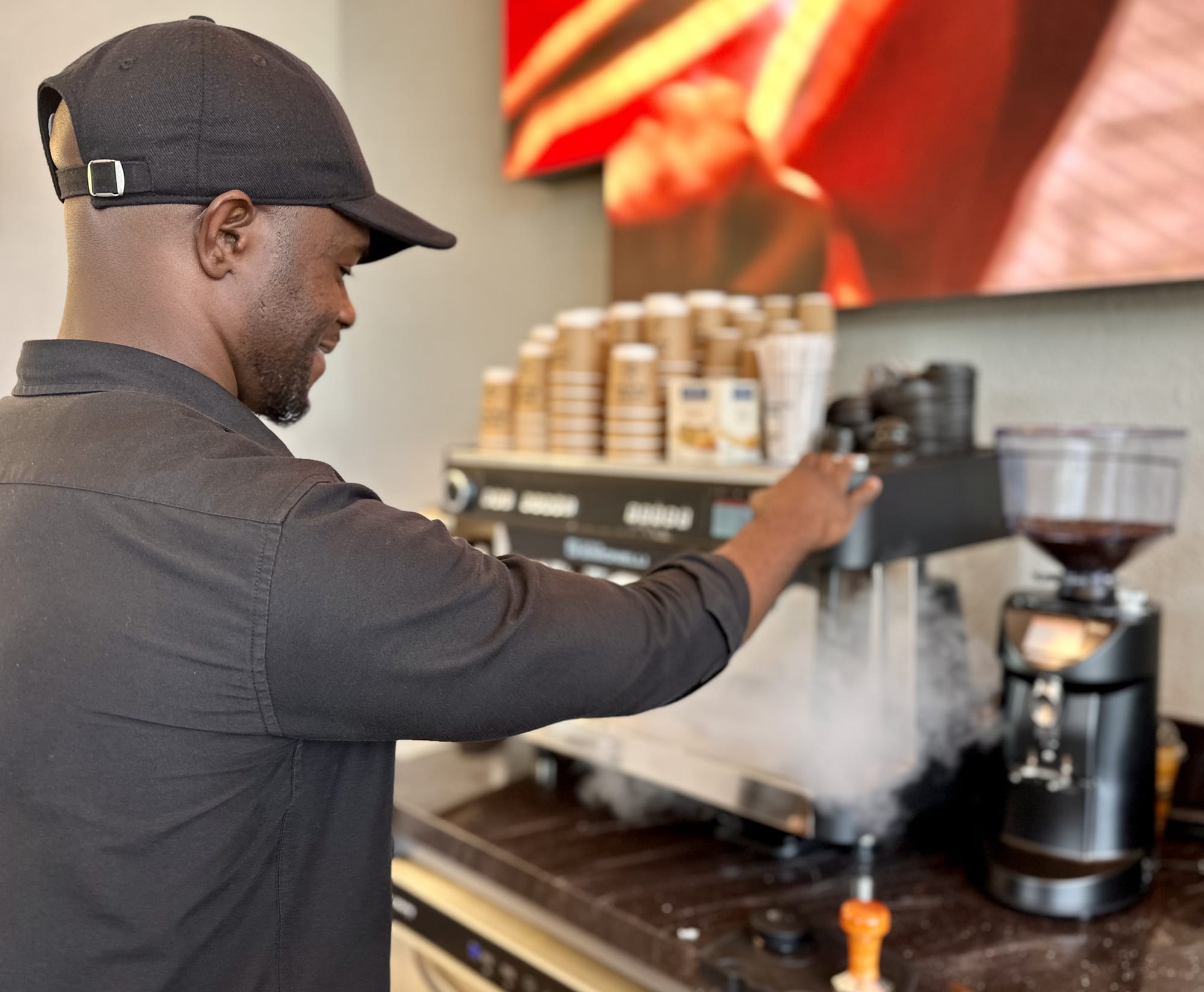
Before 8am, thermometers across Abu Dhabi are already showing more than 35°C. The instinct is to shed every unnecessary layer. Yet at a gym café in the capital, Peter Carl Mukama, a 34-year-old barista from Uganda, looks dapper in a black structured long-sleeve shirt, beige trousers, a black cap and spotless white shoes. He greets customers with a smile, his uniform meticulously pressed – a small victory against the stifling morning humidity. Keeping that professional appearance, however, comes at a cost.
Mukama's daily routine reflects a reality familiar to many UAE residents. While summer temperatures soar outdoors, much of life unfolds in heavily air-conditioned interiors. The constant transition between the two creates a unique challenge: how to remain comfortable while maintaining a professional image. “I feel very uncomfortable when I go outside and start perspiring, and then I come back inside again,” he says.
For Mukama, appearance is not defined by clothing alone: “For me, grooming and posture are as important as clothing. As a barista, the way I gesture and talk to people matters a lot. Clients also notice how I look.”
His observation aligns with the thinking of Raluca Marcu, a Romanian Image Scientist and Men's Style Coach who has been living in the UAE for more than 11 years. According to her, clothing alone never determines how someone is perceived. “If your blazer says ‘I am in charge’, but your posture says ‘I hope I’m not bothering anyone’, people receive mixed signals,” she says.
Even workplace dress codes, Mukama notes, communicate more than comfort and function: “We used to work in a jersey, but they changed the uniform. Now we wear beige trousers and a black shirt. I preferred the jersey, but I understand the change was made so we look different from the other staff.”
The adjustment may seem minor, but it illustrates a broader point: even in the hottest months of the year, appearance continues to signal role, professionalism and identity. And, according to Marcu, summer may be the season when clothing communicates most clearly. Her argument challenges a common assumption across the Gulf: that dressing well in extreme heat means stripping an outfit down to its essentials. In reality, she argues, the disappearance of layers does not remove status, authority or confidence cues. Instead, it makes them more visible.
Summer style is like a 'solo performance'
Summer does not pause business lunches, board meetings, gallery openings or late-night gatherings in the UAE. What it changes is the visual language through which people are perceived. What remains, Marcu explains, is fabric, fit, grooming, posture and presence, elements that suddenly carry much more weight.
Raluca does not believe summer style reveals more than winter tailoring. Rather, she argues, it leaves fewer places to hide: “Winter is generous. You have coats, scarves, knitwear, boots, heavier fabrics, darker colours, basically a ‘full orchestra’. Summer style is more like a solo performance. In that stripped-back context, every detail becomes louder.
“A linen shirt can appear effortlessly elegant or unintentionally careless. A polo shirt can communicate refinement or neglect depending on how it fits and holds its shape.”

The psychological shift, she adds, is as important as the aesthetic one: “During cooler months, tailoring often provides structure for the body. In summer, the body and the clothing must work together, making posture, movement and grooming more noticeable.”
“Anyone can look serious in a structured coat. The real test is: can you look credible, comfortable and aligned in breathable cloth?”, she adds.
The absence of heavier tailoring does not necessarily diminish authority. For Ludmilla Araújo, a Brazilian style consultant and personal branding specialist, linen, hemp and cotton in tailored silhouettes allow men to remain elegant without compromising comfort.
Wear it with confidence
The relationship between clothing and perception is not limited to service industries. For Rodrigo Fonseca, a 35-year-old Brazilian game developer who regularly visits the UAE, summer has little impact on how he approaches personal presentation. “The summer doesn't change my presentation thinking,” he says, adding that he adjusts his choices according to context and environment.
Araújo builds on this idea. She emphasises the importance of understanding dress codes, even when they are not explicitly stated. In her view, respecting these codes helps people feel they belong in a space rather than feel out of place, and that sense of belonging naturally contributes to a more confident presence.
Fonseca's experience is shared by many residents who spend most of their day moving between air-conditioned spaces: “In general, you think about how you dress indoors only,” he says. Like Marcu, he sees a direct connection between appearance and behaviour. And that connection becomes particularly important when traditional markers of authority begin to disappear. A jacket, overshirt or blazer can help create visual structure, but confidence is rarely communicated through garments alone.
Raluca indicates that confidence is often read through intentionality rather than perfection. Layering can contribute to that impression by creating depth and visual interest, but simplicity can communicate the same message when executed with care. A well-fitted shirt, polished shoes or a strong collar may seem like small details, yet in summer they often become the details that matter most.
What remains when dressing becomes simpler
Outside, the temperature continues to climb. Mukama adjusts his cap before returning to the chilled interior of the gym café, where customers move between workouts, coffees and conversations. His uniform may be part of a workplace dress code, but the message it sends extends fabric and colour. In a season that removes much of menswear's traditional structure, appearance is no longer carried by layers alone. What remains: posture, grooming, confidence and intention, becomes impossible to ignore. And perhaps that is summer's quiet lesson: when clothing has less work to do, people reveal more of themselves.
Comments ()